
An app worth the 34 years behind it
A Slovenian marina management platform, running in marinas on six continents after more than 34 years in the business.
- mobile app design system
- FlutterFlow UI build
- web dashboard refresh
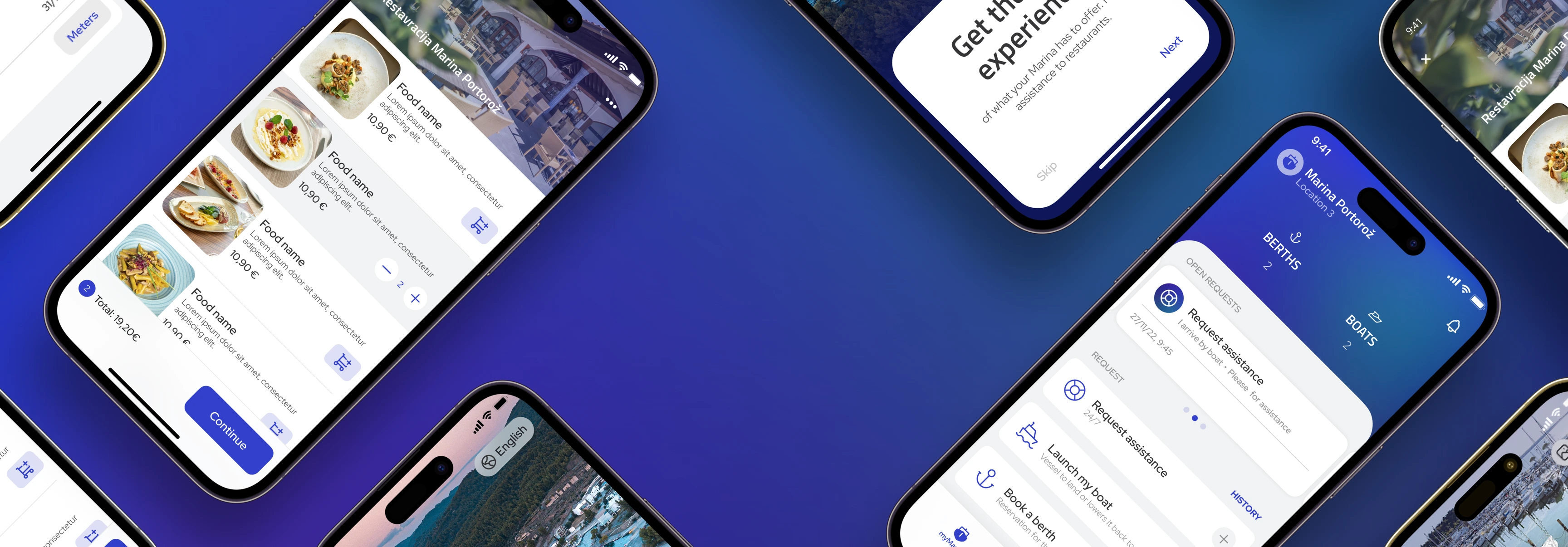
- 123 components
- in the myMarina design system, shipped as Flutter code
- iOS + Android
- the refreshed app, live on both stores since April 2024
- 2024 and 2026
- two refreshes Marina Master announced, the boater app then the platform dashboard
The challenge
IRM has built marina management software in Ljubljana for more than 34 years, and Marina Master now runs in marinas on six continents. The platform is sold to the marina: berths, contracts, invoicing, lifts, movements, the daily operation of a working harbour. myMarina is the other half of it, the app the boat owner holds. That app had not kept up. The version on the stores was published in 2017 and worked the way 2017 apps worked, a mobile web page inside a native wrapper. Its own release notes record the maintenance that kept it upright: a request switched from the desktop page to the mobile one, a fix for the screen bouncing under a touch drag. The screenshots show a login form and a column of blue links. It worked, and boaters used it, and nothing about it said that the software behind it was the software marinas on six continents had chosen. A refresh had to carry two audiences at once. The marina manager sees myMarina during a sale, so it argues for the platform. The boat owner uses it to launch a boat, file an insurance document or pay an invoice, so it has to disappear into the task. And the workflows underneath were not ours to reinvent: they are the platform, and they had to keep the shape the platform already gave them.
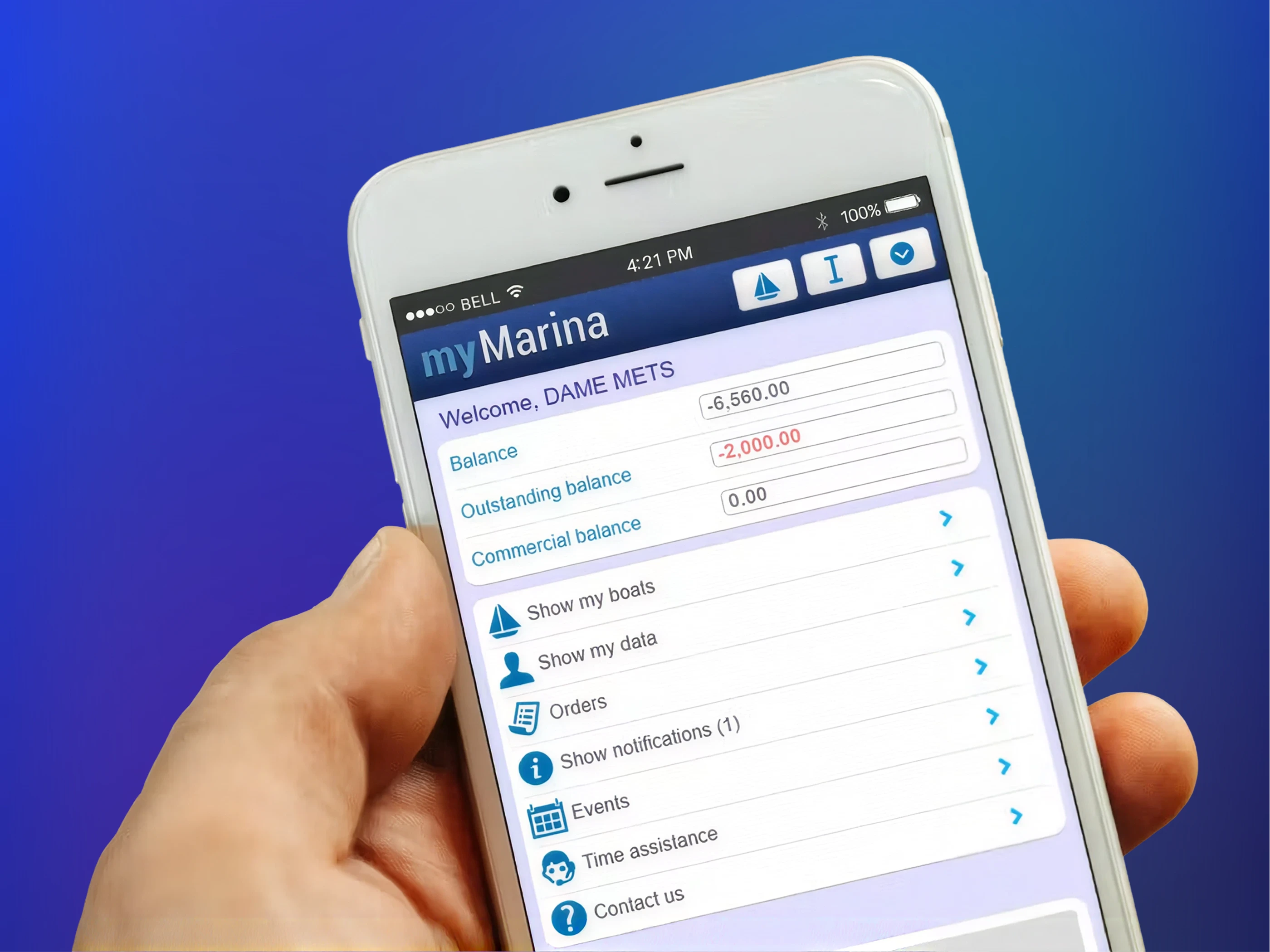
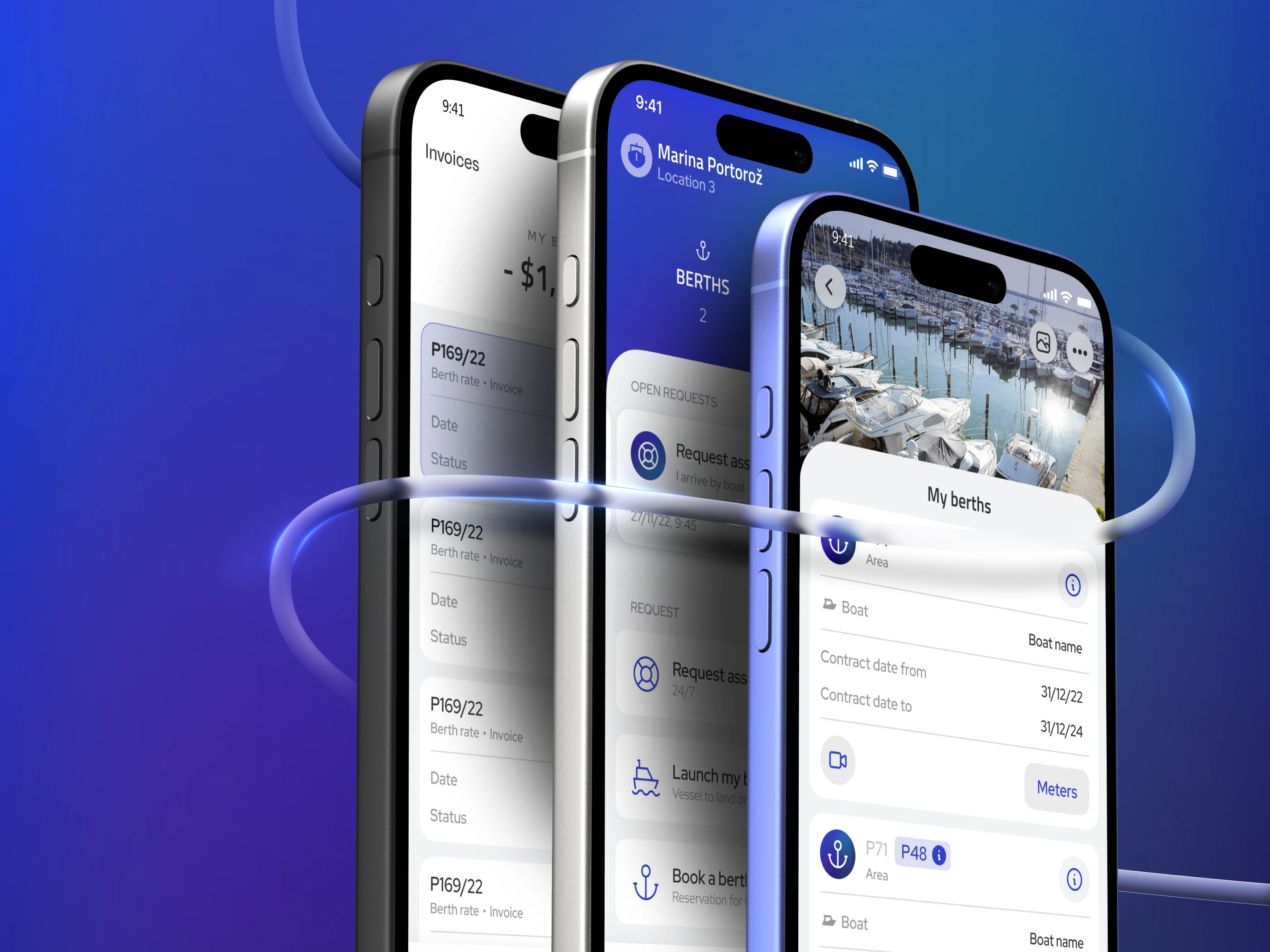
The app boaters used until 2024, and the one they use now.
What we did
1Design a system, not a set of screens
Marina Master carries more than 34 years of accumulated function, so a refresh drawn screen by screen would have drifted apart before it shipped. The work started as a design system rather than a set of layouts: type, colour, spacing, and the components a boater actually meets, which are a request, a boat, a berth, a contract and an invoice. It came to 123 components, and every screen was assembled from them. The point was not a tidier handover. It was that the next thing IRM adds arrives already designed, because the parts it needs exist and already agree with each other.
2Build the UI in FlutterFlow, hand back Flutter code
The design was implemented, not handed over as artwork. The UI was built in FlutterFlow, then exported as Flutter and shipped by IRM's own engineers, who wired the Marina Master platform in behind it. That split is the arrangement: 123 components arrive as code that behaves the way it was drawn, and the release stays with the team that knows the platform. One build covered both stores. Marina Master announced the refreshed app on 17 April 2024, and the new iOS listing went live the next day.
3Come back for the dashboard the staff live in
Two years later IRM came back for the web application marina staff work in all day, which still looked its age. The brief was a complete design refresh rather than a tidy-up, and it is design: IRM build it. Marina Master announced the first of it on 10 June 2026, describing information tailored to each user's role, whether that is overseeing operations, managing reservations, monitoring finances or tracking marina performance. The rest of the application is still being redesigned. That they came back for the core product, after the app, is the part of this worth pointing at.
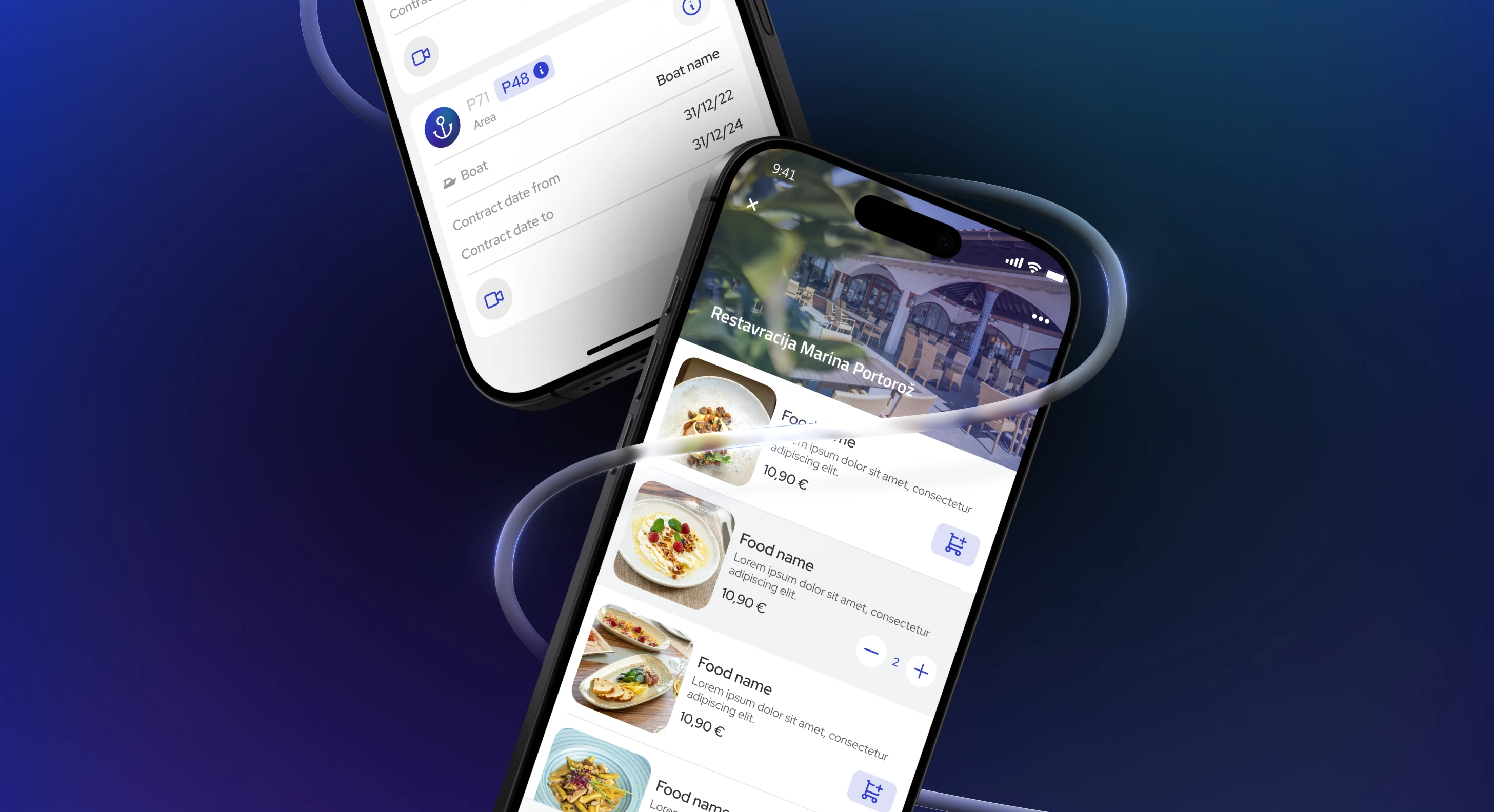
Build the UI in FlutterFlow and export it as Flutter code, rather than hand over a design file for IRM's engineers to rebuild.
There were two obvious routes. A design studio hands over Figma and a specification, the client's engineers rebuild it, and the spacing and states drift over the following months. Or the studio takes the whole build, which puts it between IRM and their own release. Neither fits a platform this old. Marina Master has more than 34 years of workflow behind it, and the people who understand that workflow are inside IRM. So the UI was built rather than drawn, exported as Flutter, and shipped by their team. The 123 components arrive as code that already behaves the way it was designed, and the release, the platform and the domain knowledge all stay where they were.
“They are very devoted to what they do and they put all their efforts to understand what you need. Communication is transparent and responsive.”
 Vesna PavlovičCEO, IRM Ltd.
What we built
- Platforms
- iOS Android Web
- Stack
- FlutterFlow (UI build) Flutter (exported, shipped by IRM's engineers) IRM own the Marina Master platform behind the UI
- Design system
- 123 components
- Timeline
- From 2024 and still running. The refreshed app reached the App Store on 18 April 2024, and the refreshed dashboard was announced on 10 June 2026.
Related work
- ux/ui design
- ios app design
- macos app design
- design system
Mac, iPad and iPhone from one design, and a 4.8-star launch
Remote desktop for the AI era. Monitor and control agents running on a headless Mac from anywhere.
- website design
- webflow website
- mobile app ux/ui
- mobile app development
- integrations
The website and app behind a YC startup at $9.4M ARR
A friendship app that matches women in the same city, then runs them through six weeks of facilitator-led meetups.
- ux/ui design
- design system
- ios app
- embedded web app
- webflow website
4.8 stars from 1,500 ratings for an app that invests for you every week
An investing app that picks the stocks, then invests a set weekly budget on the user's behalf.