
4.8 stars from 1,500 ratings for an app that invests for you every week
An investing app that picks the stocks, then invests a set weekly budget on the user's behalf.
- ux/ui design
- design system
- ios app
- embedded web app
- webflow website

- 4.8 stars
- from 1,500 App Store ratings
- $500 to $2,000
- a week in new revenue from the points system we designed and built
- 15 to 30 tickets
- shipped every week by the Benson team on the workflow we set up
The challenge
Benson makes a promise that is simple to state and hard to earn. Set a weekly budget, fund the account, and the app invests for you every week. The user is not asked to confirm each time. That promise is what people pay for, and it is also the reason they hesitate. The product moves real money in a regulated market, so someone has to hand over permission before they have any evidence it works, and the app has to keep earning that permission every week afterwards. No single screen solves that. The sequence that made people comfortable was found by testing: what a user reads before the first investment, how much the app explains its own reasoning, when it asks and when it simply acts, and what they see the week after money has left the account. We ran that as an experiment repeatedly rather than designing it once and defending it. The engagement also had to hold pace. Benson shipped a feature most weeks for almost two years, across an iOS app, web features embedded inside it, and the marketing site. Design that arrives after the release is not design, so the work included changing how the team shipped, not only what it shipped.
What we did
1Design an investing flow people would trust with a weekly budget
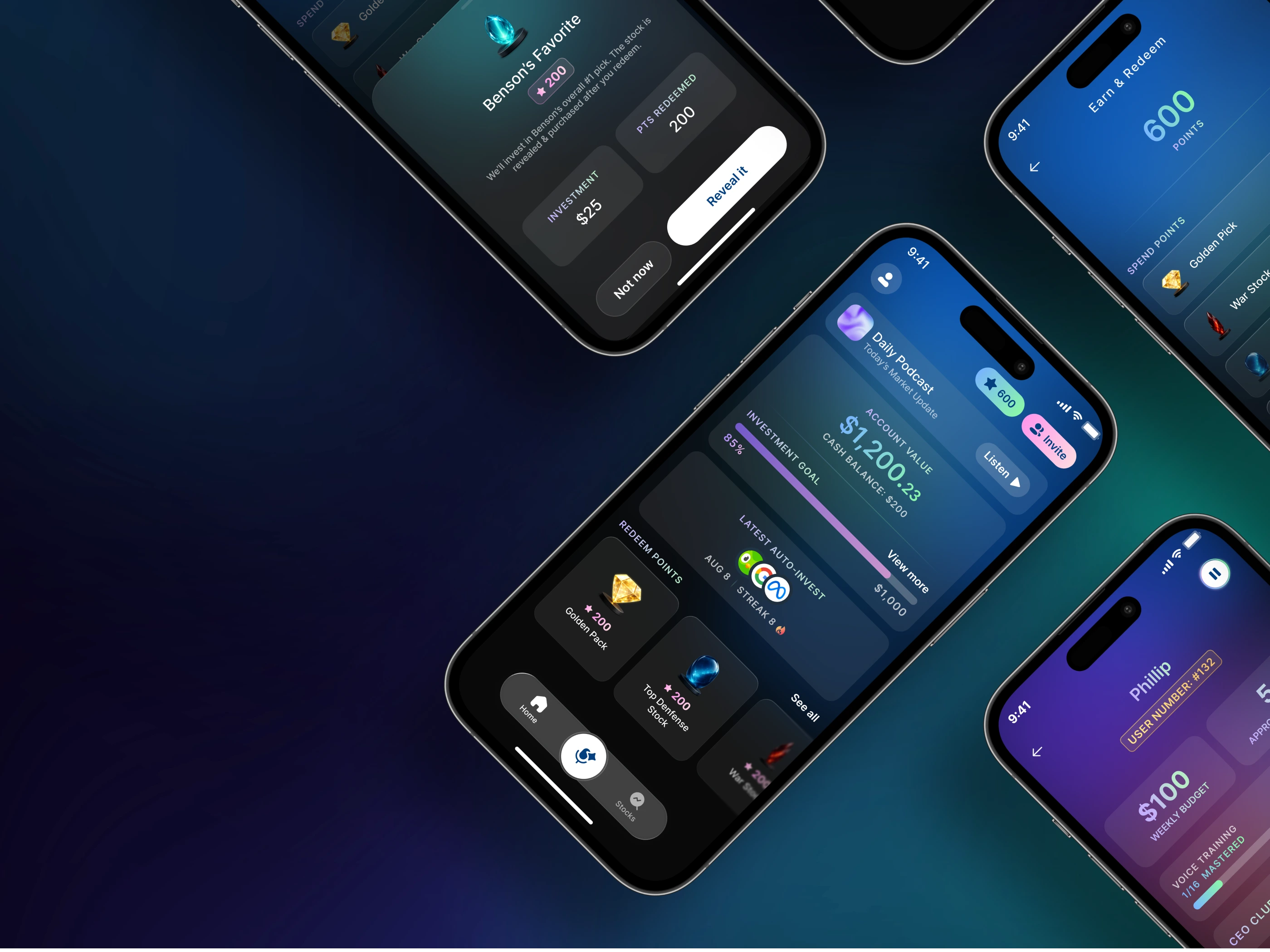
The core interaction is a user naming an amount and then letting the app spend it every week. We designed the sequence around the moment permission is given: what a user reads before the first investment, how much the app explains its reasoning, and what they see the week after money has gone out. Several versions of that sequence were tested against real use rather than argued about internally. The one that held gives the user a standing decision to make once, then visible evidence afterwards. A per-transaction confirmation step would have been the safe design, and it would have quietly undone the automation Benson sells.
2Set up an AI-native workflow, then take on the build
Design on its own could not keep up with a weekly release. We set up an AI-assisted development workflow with Claude Code and then took on implementation, on iOS features and on the web features embedded inside the app. The marketing site was implemented in Webflow during the same period. The change was in who could finish something: a design no longer waited in a queue to become code. On that workflow the Benson team moved fifteen to thirty tickets a week. The backend stayed outside our scope throughout, which kept the boundary clear and stopped the workflow change from becoming a rewrite.
3One design system across iOS and the embedded web app
The app is two technologies wearing one face: native iOS screens, and web features running inside the same app. Without a shared system those two drift within weeks and the join becomes visible to the user. We built the design system in Figma and implemented the shared components for the embedded web app in code, so a component existed once as a design and once as a build, and both were ours to keep in step. That is what made a weekly release safe. A new feature could reuse settled parts instead of reopening decisions that had already been made.
4Ship a feature a week, read against the analytics
Speed only counts if someone checks the result. Benson ran a strict analytics setup, and releases were read against it daily and weekly rather than reviewed at the end of a quarter. That loop decided what got iterated and what got dropped, and it is why the flow around trust went through many versions instead of one. Over almost two years the app held its weekly rhythm and reached 4.8 stars from 1,500 App Store ratings. Pace on its own would have been noise. Pace with measurement is what let the product keep changing without losing the people already using it.
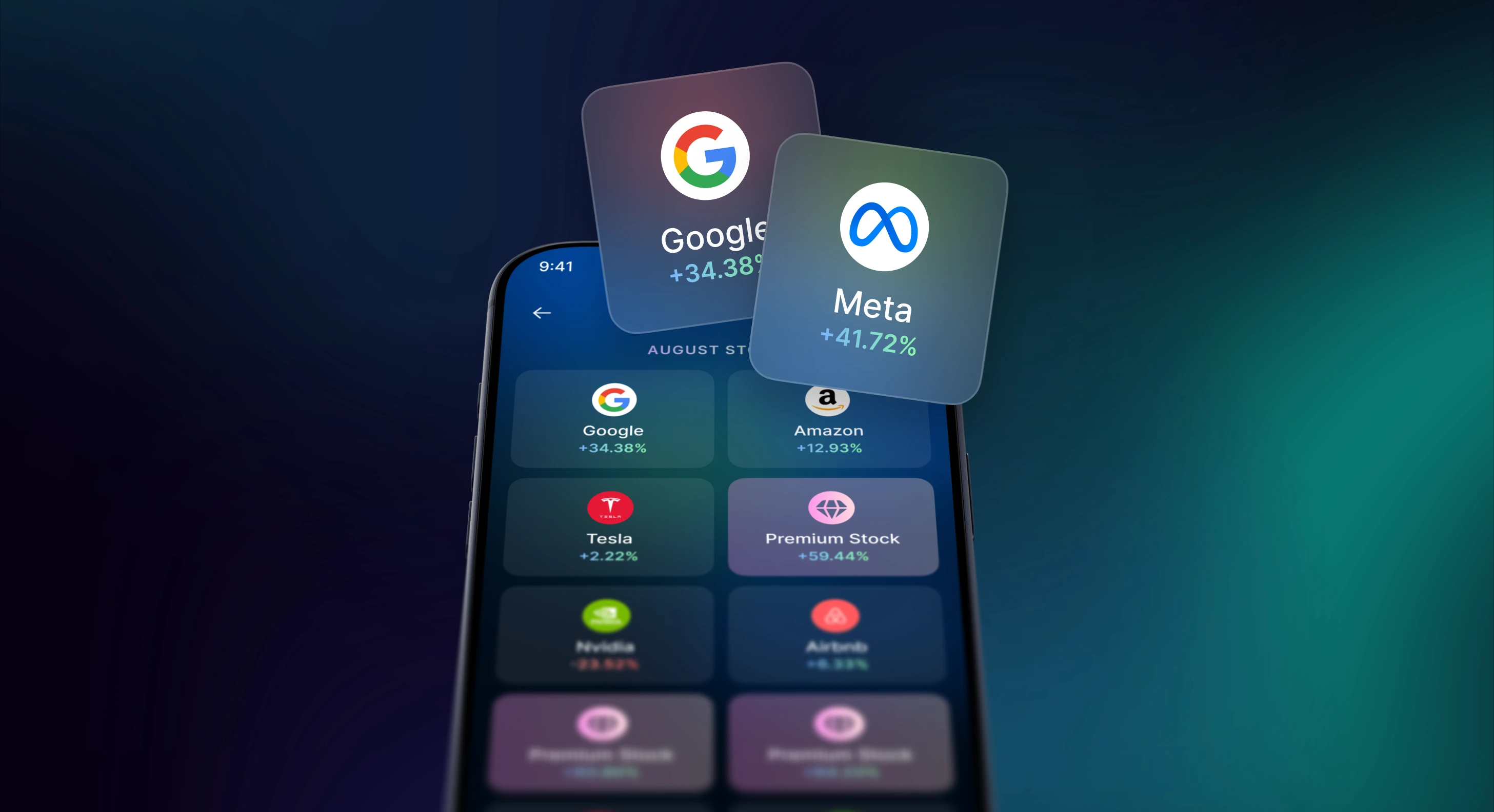
We added a points economy to a subscription product, and put stock purchases behind it.
The obvious route for a subscription app that wants more revenue is to raise the price or move more features behind the paywall. That works against Benson specifically. The product sells the removal of effort, so every locked feature hands a paying user a fresh reason to doubt the automation they already bought. We designed and implemented a points system instead. Users earn points by listening to the daily podcast and by completing a weekly investment, and they can also buy points outright. Points redeem against special offers and stock purchases the standard paid experience never shows. It now brings Benson $500 to $2,000 a week, alongside subscriptions rather than out of them.
“I work with 350life and I am really happy with the relationship. They deliver what we need, are always on-time and are really flexible. A real joy to work with!”
 Rok GregoričLead iOS Developer, Benson
What we built
- Platforms
- iOS Embedded web app Website
- Stack
- Swift Next.js Webflow
- Design system
- 39 shared components for the embedded web app, and 45 distinct app screens across 124 design frames
- Integrations
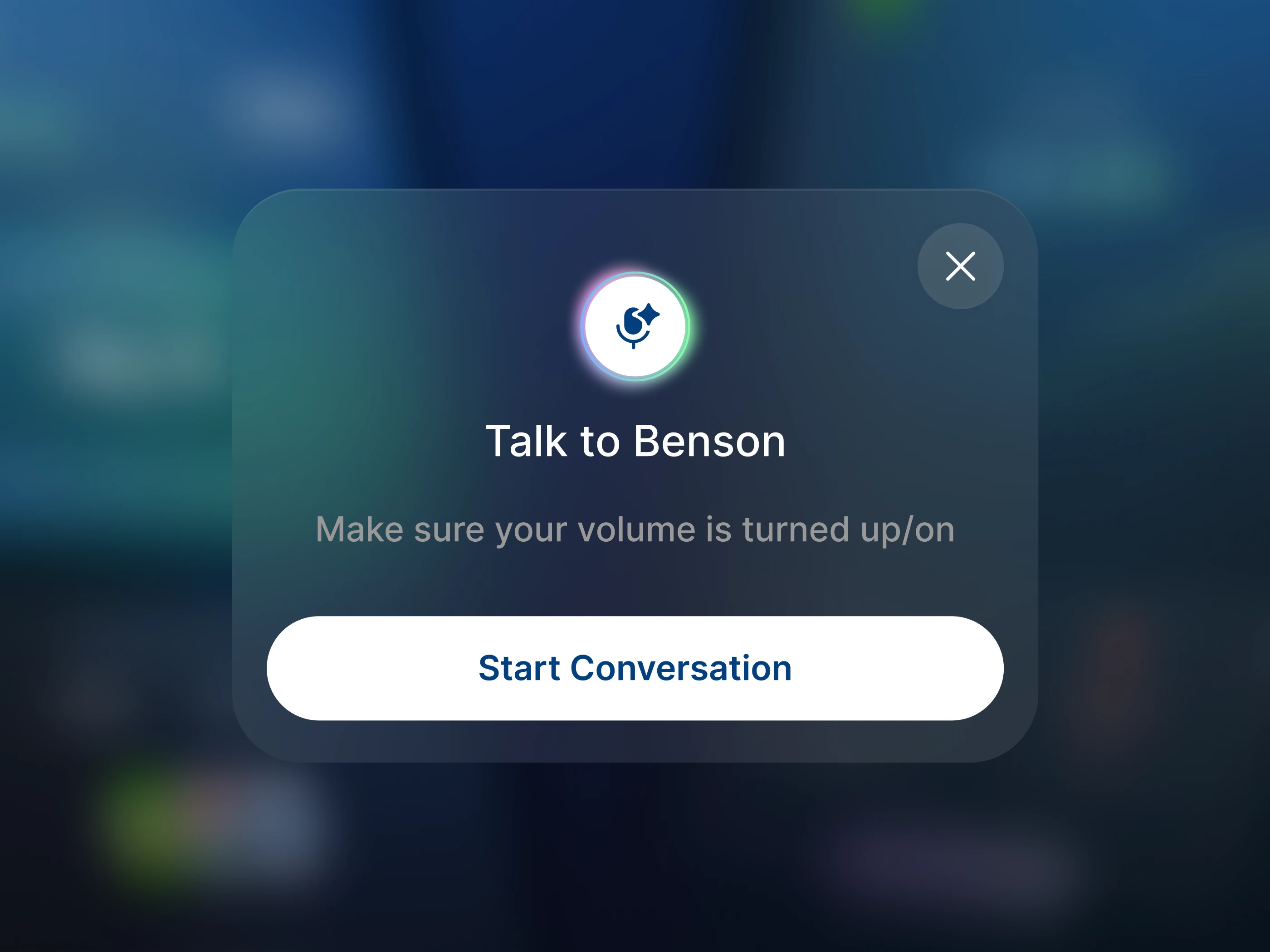
- Webull, for connecting the user's brokerage account ElevenLabs, running the voice agent: navigate the app, place orders, and ask questions about your portfolio
- Timeline
- September 2024 to July 2026
Related work

- ux/ui design
- ios app design
- macos app design
- design system
Mac, iPad and iPhone from one design, and a 4.8-star launch
Remote desktop for the AI era. Monitor and control agents running on a headless Mac from anywhere.
- website design
- webflow website
- mobile app ux/ui
- mobile app development
- integrations
The website and app behind a YC startup at $9.4M ARR
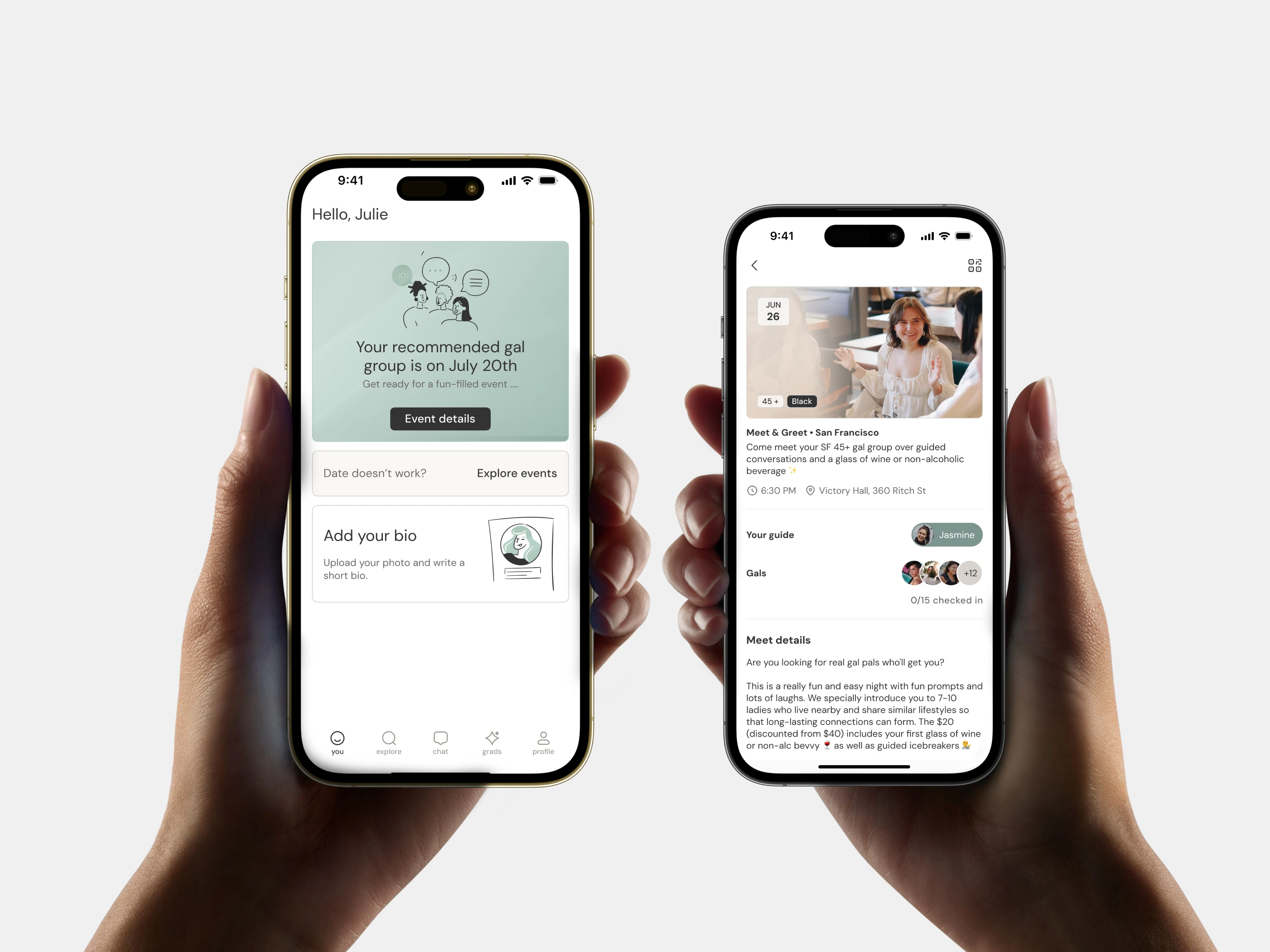
A friendship app that matches women in the same city, then runs them through six weeks of facilitator-led meetups.

- mobile app UX/UI
The control app for a luxury motorhome, designed to match the vehicle
A German manufacturer of luxury motorhomes, building around 400 vehicles a year at Schlüsselfeld-Aschbach since 1985.