3,500+ parents registered in the first month
A Slovenian webapp that rates children's cartoons on seven measurable stimulation criteria, so a parent can tell how hard a programme works to hold a child's attention.
- product design
- web app build
- editorial content
- 3,500+
- parents registered in the first month
- 90.9%
- of registered parents finished onboarding
- 4.94 / 5
- average app rating, from 138 parents
The challenge
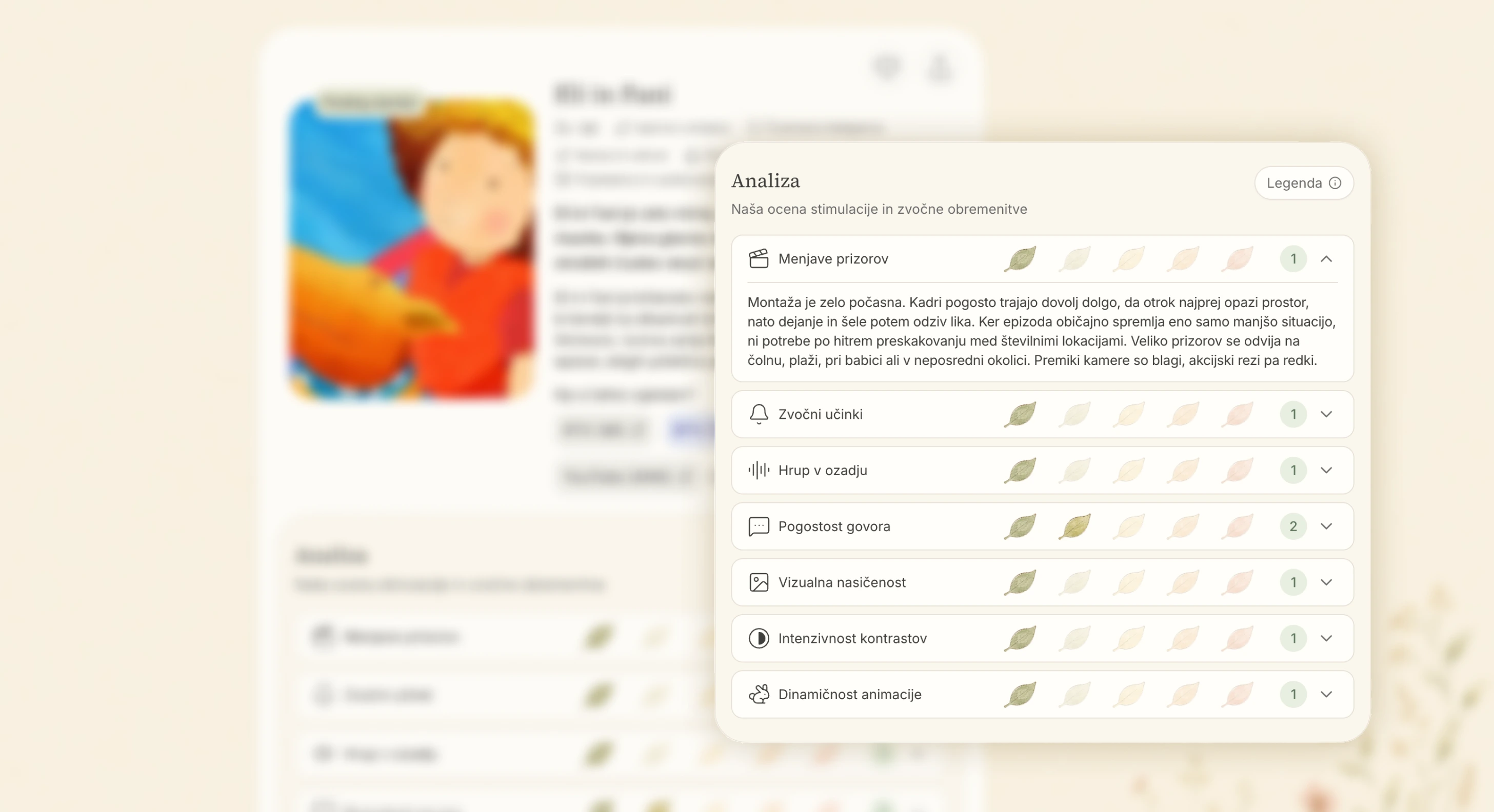
Parents deciding what a three-year-old can watch have two kinds of help available, and neither answers the question they are actually asking. Age ratings say who a cartoon is for, not what it does to a child who is already tired. Recommendation lists are opinion. Alani's premise is that the part parents worry about, how hard a programme works to hold attention, is measurable: how often the scene cuts, how loud and dense the sound is, how saturated the background sits, how fast the animation moves. Seven criteria, drawn from nine peer-reviewed sources. Two things made that hard to build. A score only changes behaviour if a parent trusts it, and trust dies the moment they open a cartoon with no rating, so partial coverage was never an option. And the audience arrives from Instagram, inside Instagram's own in-app browser, where analytics events frequently never fire and a download can open a tab with no way back. The product had to be measurable and usable in the one environment that breaks both.

What we did
1Rate every cartoon, not most of them
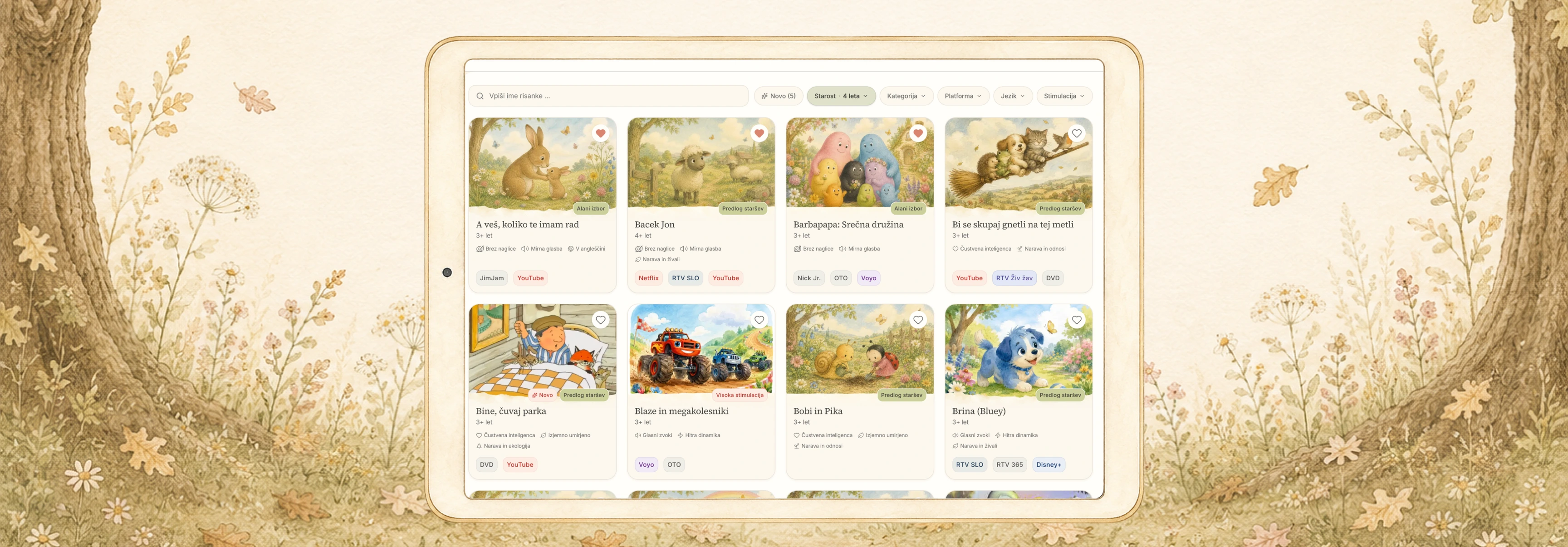
The catalogue holds 122 cartoons and all 122 carry a score on all seven criteria. There is no backlog of unrated titles, because a rating system with gaps teaches a parent to go and check somewhere else. The method is published rather than asserted: nine peer-reviewed sources, each with a DOI, and where a study states a limitation, that limitation is shown to the parent instead of being buried. Two of the nine carry one. Fifty categories and twenty-one viewing platforms are mapped across the catalogue, so a parent can start from what their child already likes or from what they can actually stream tonight.
2Get parents past the sign-up and into a real profile
Onboarding runs four steps and carries a skip button, and 90.9% of registered parents finish it anyway. 85.3% go on to create at least one child profile, and the 3,659 accounts hold 4,560 children between them, so parents are setting the product up for a family rather than for one child. Sign-in splits almost exactly in half between Google and an email with a password, 1,829 against 1,830, which means dropping either route would have cost half the base. Confirmed email addresses sit at 98.1%, which is not what a free sign-up usually looks like.
3Write things parents finish, and measure it ourselves
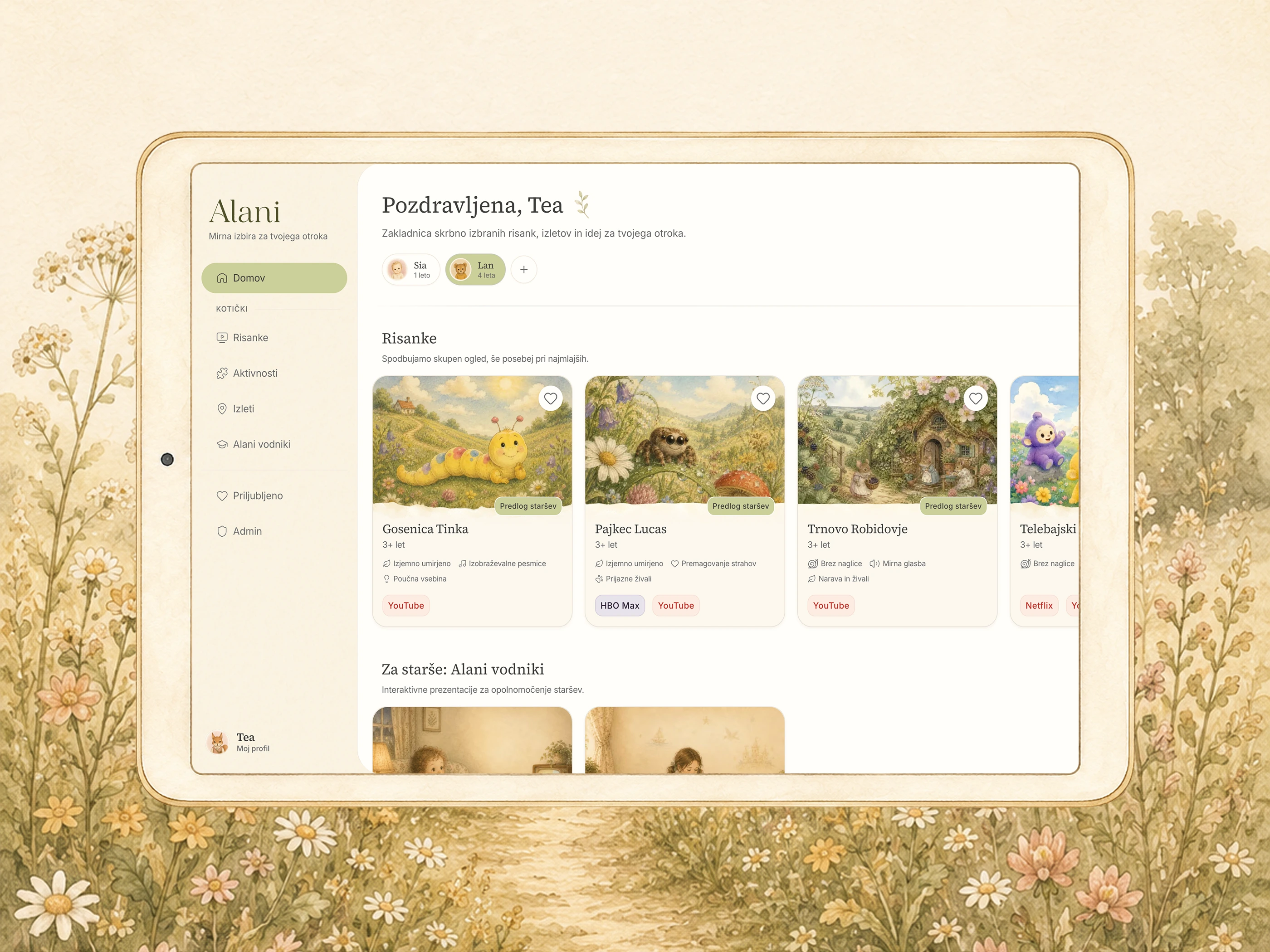
Two full-screen interactive guides run on a typed engine of sixteen screen types checked at compile time, with the content written in TypeScript rather than held in a CMS. More than nine in ten parents who start a guide reach the end, 92.2% on one and 91.7% on the other, and the median parent spends 101 seconds on a screen of the longer one. That is reading, not scrolling. 89.7 hours of it has been measured across the two. The measurement is ours rather than Google's: analytics events often never leave Instagram's in-app browser, so the product records its own.
We built the whole product free and grew it to 3,659 parents before putting anything at all behind a payment.
The obvious move is to charge early and let revenue tell you whether the thing is wanted. That answers the wrong question here. Alani asks a parent to trust a number enough to change what their child watches, and a payment taken before that trust exists measures price sensitivity rather than belief. So the product shipped free and the work went into being read and answered: guides parents finish, a survey 387 of them completed, 85 content suggestions from parents with all 85 acted on. The payment infrastructure is built and sitting unused. Revenue today is zero euro, which is the intended state rather than a shortfall.
What we built
- Platforms
- Web
- Stack
- Next.js 16 React 19 TypeScript Tailwind CSS 4
- Design system
- 149 React components, 46 of them shared, built without a third-party component library
- Integrations
- Supabase Stripe Resend MapLibre GL Vercel Google Analytics 4
- Timeline
- First commit 1 May 2026, first registration 19 May 2026, still shipping
What’s next
Alani is still shipping. A paid tier is the next step, and it goes live only after the free product has been in enough parents' hands to know what is worth charging for.
Related work
- Product design
- App development
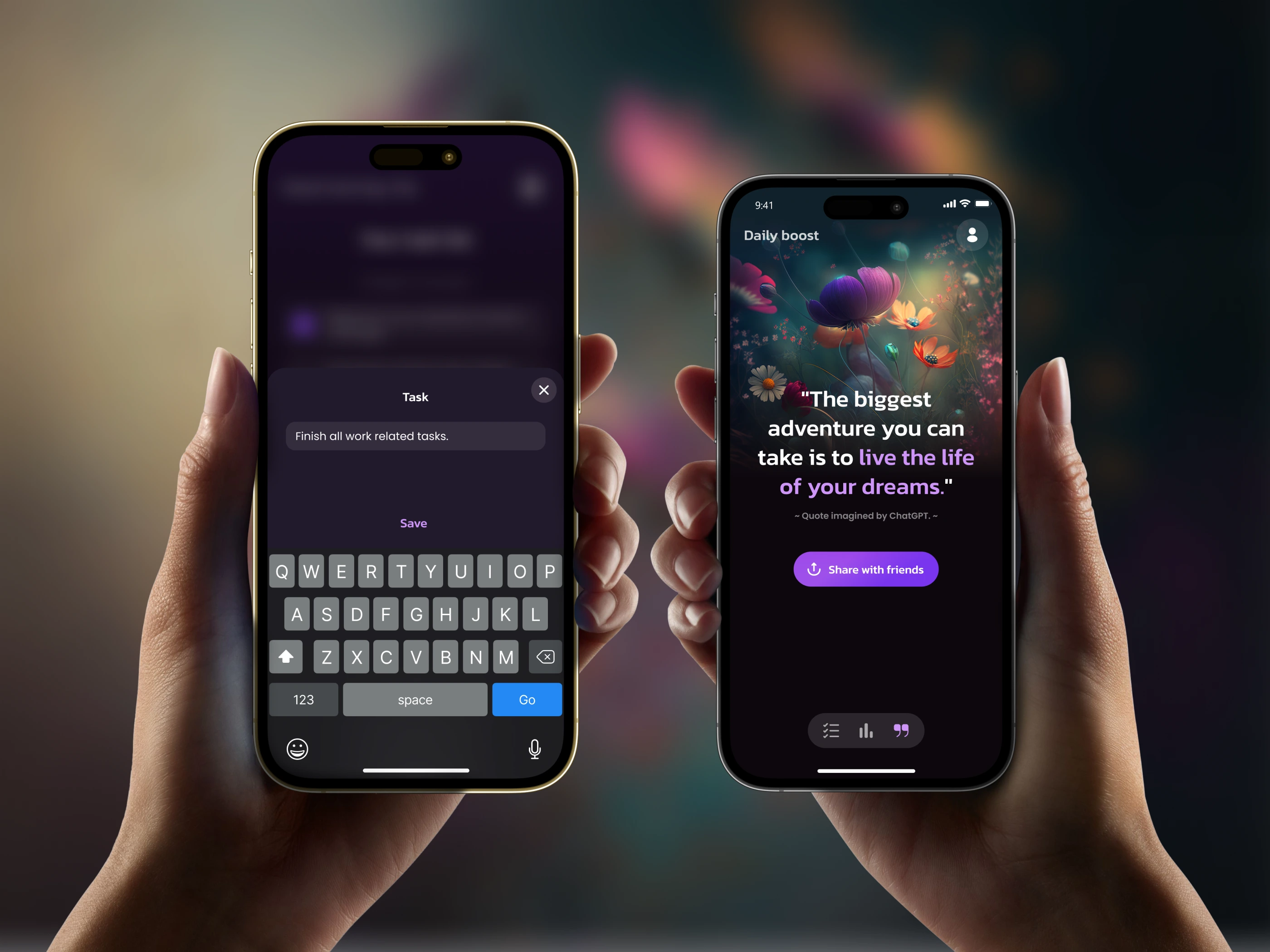
From a five-year spreadsheet to iOS and Android in one week
A daily-goals app that turns a long-running personal spreadsheet ritual into a mobile product.
- website design
- webflow website
- mobile app ux/ui
- mobile app development
- integrations
The website and app behind a YC startup at $9.4M ARR
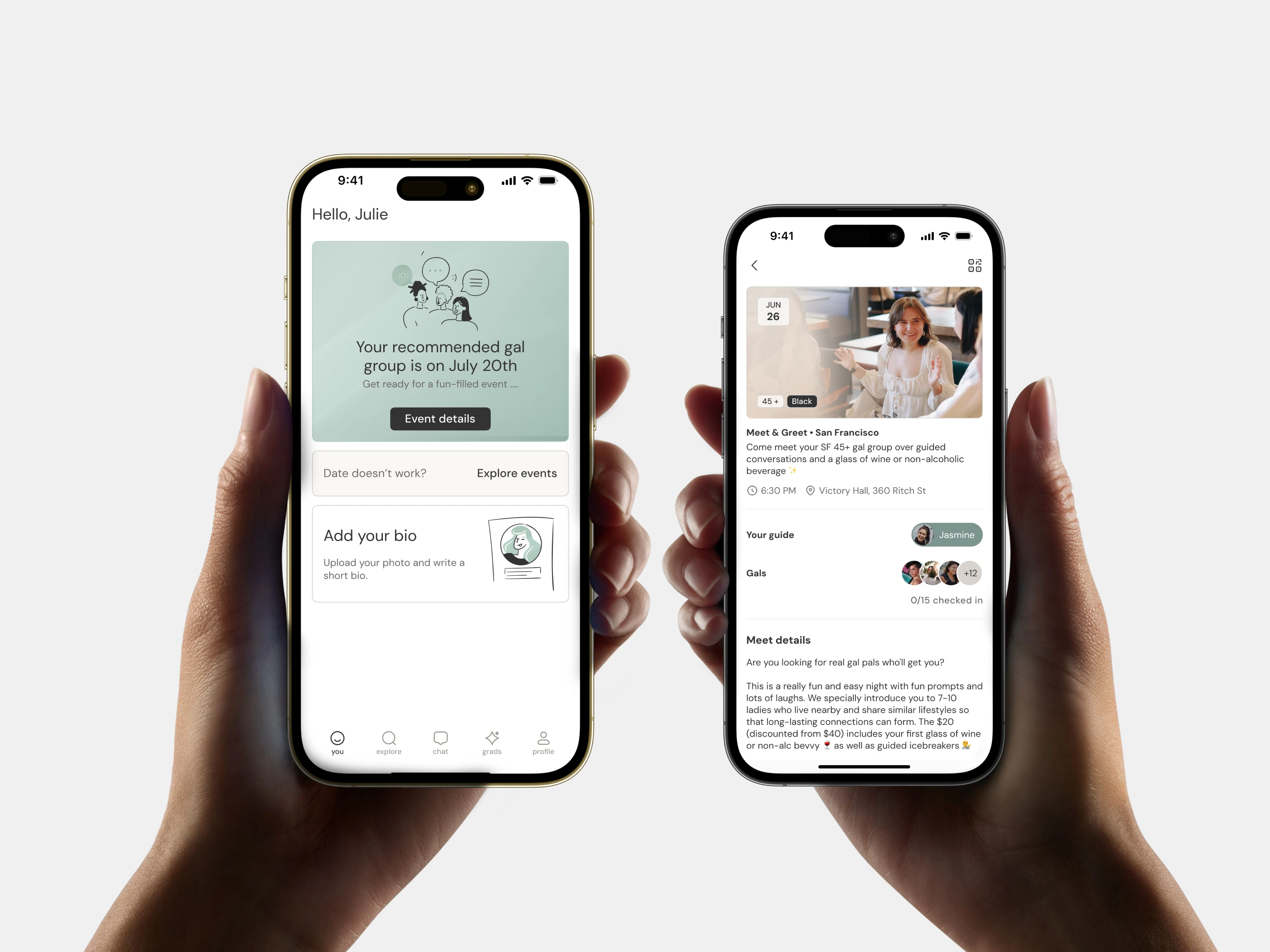
A friendship app that matches women in the same city, then runs them through six weeks of facilitator-led meetups.
- ux/ui design
- design system
- ios app
- embedded web app
- webflow website
4.8 stars from 1,500 ratings for an app that invests for you every week
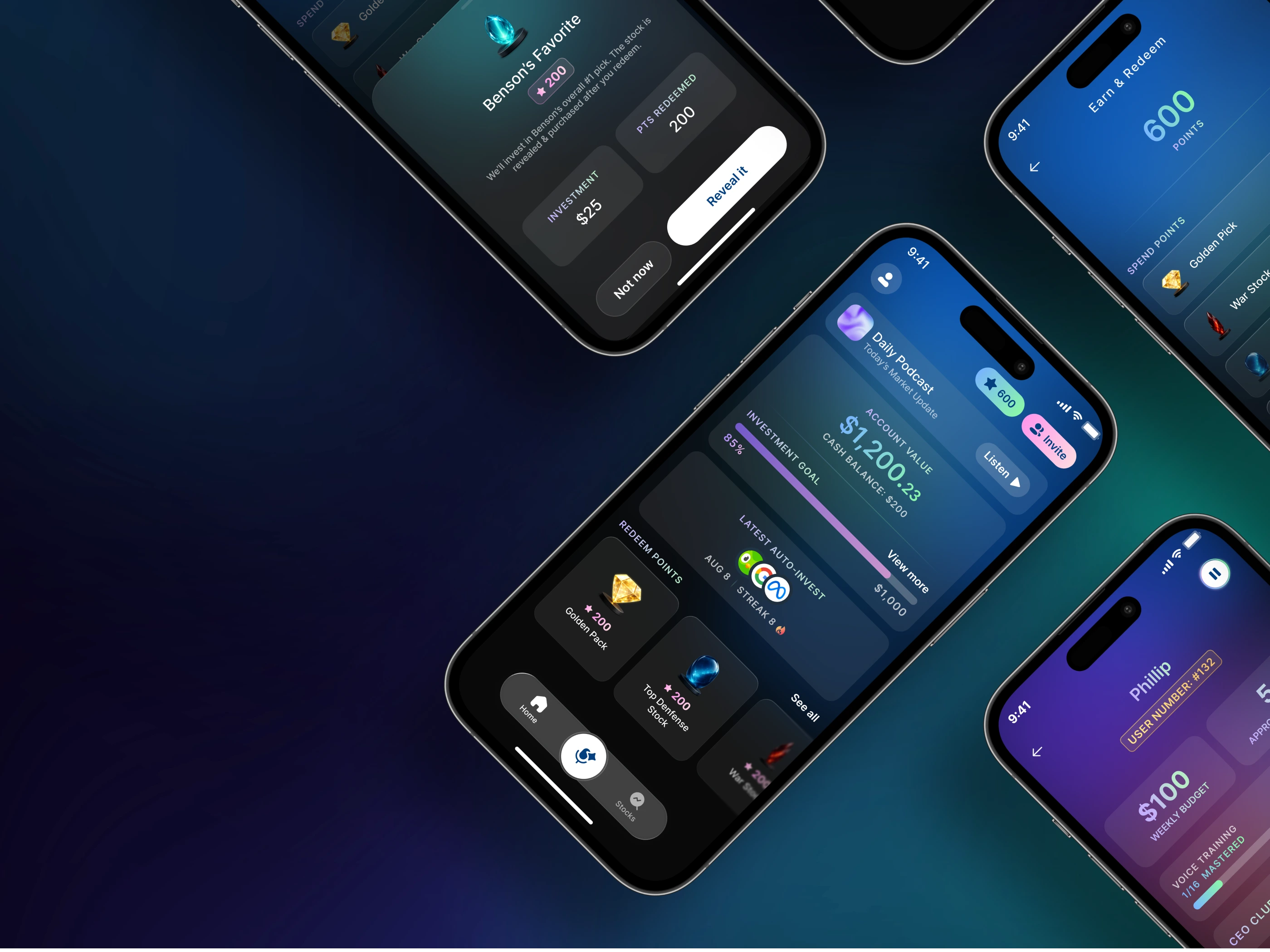
An investing app that picks the stocks, then invests a set weekly budget on the user's behalf.