
Satellite collision avoidance, designed to be acted on
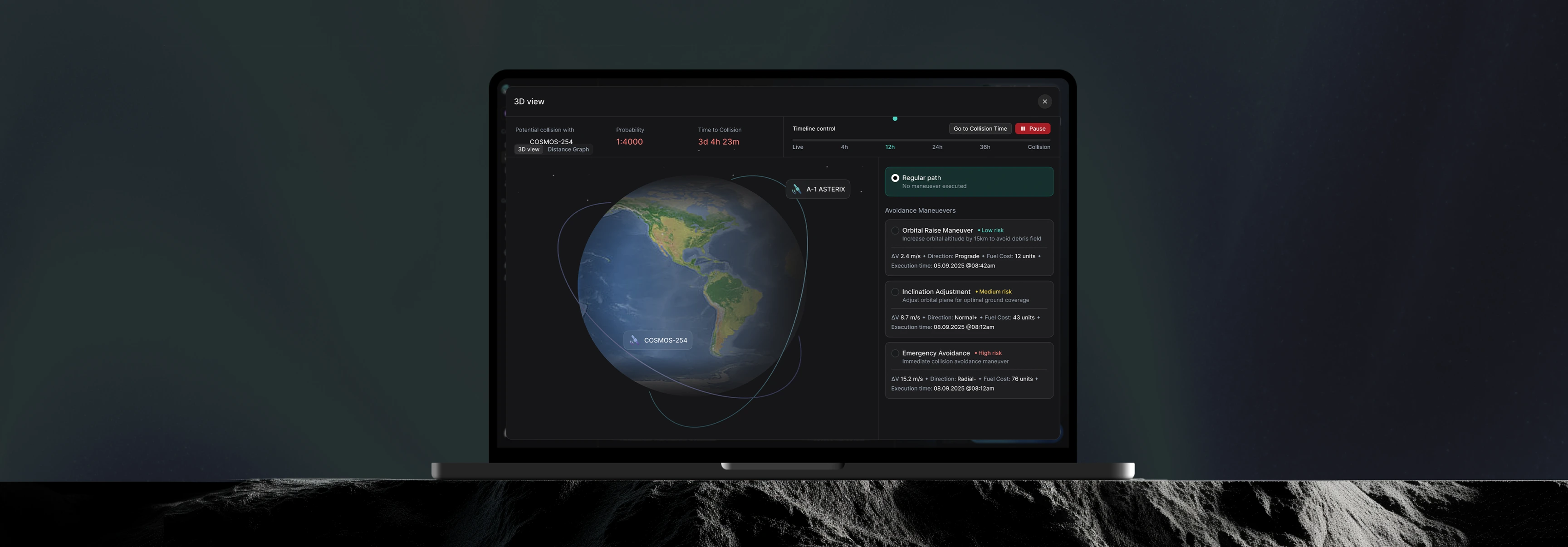
A satellite collision-avoidance platform that predicts conjunction risk and coordinates the avoidance maneuver between two operators.
- brand
- website design
- web app UX/UI
- design system
- Ongoing since April 2025
- brand, website, web app, and the design system, in one continuous engagement
- 50 components
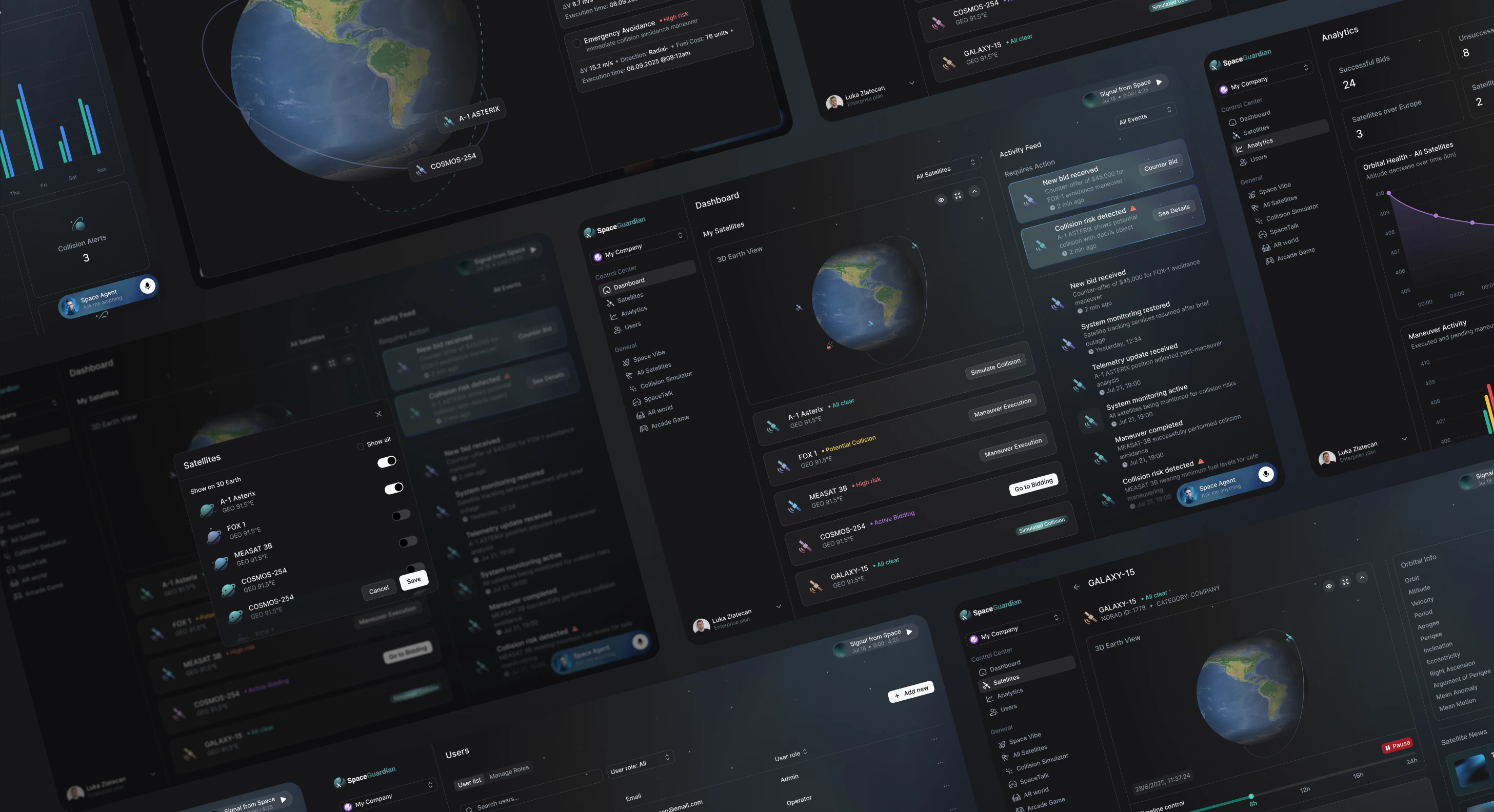
- and 30 screens in the design system their engineers build from
- Web Summit 2025
- the web app we designed, shown as the MVP in the Startups area
The challenge
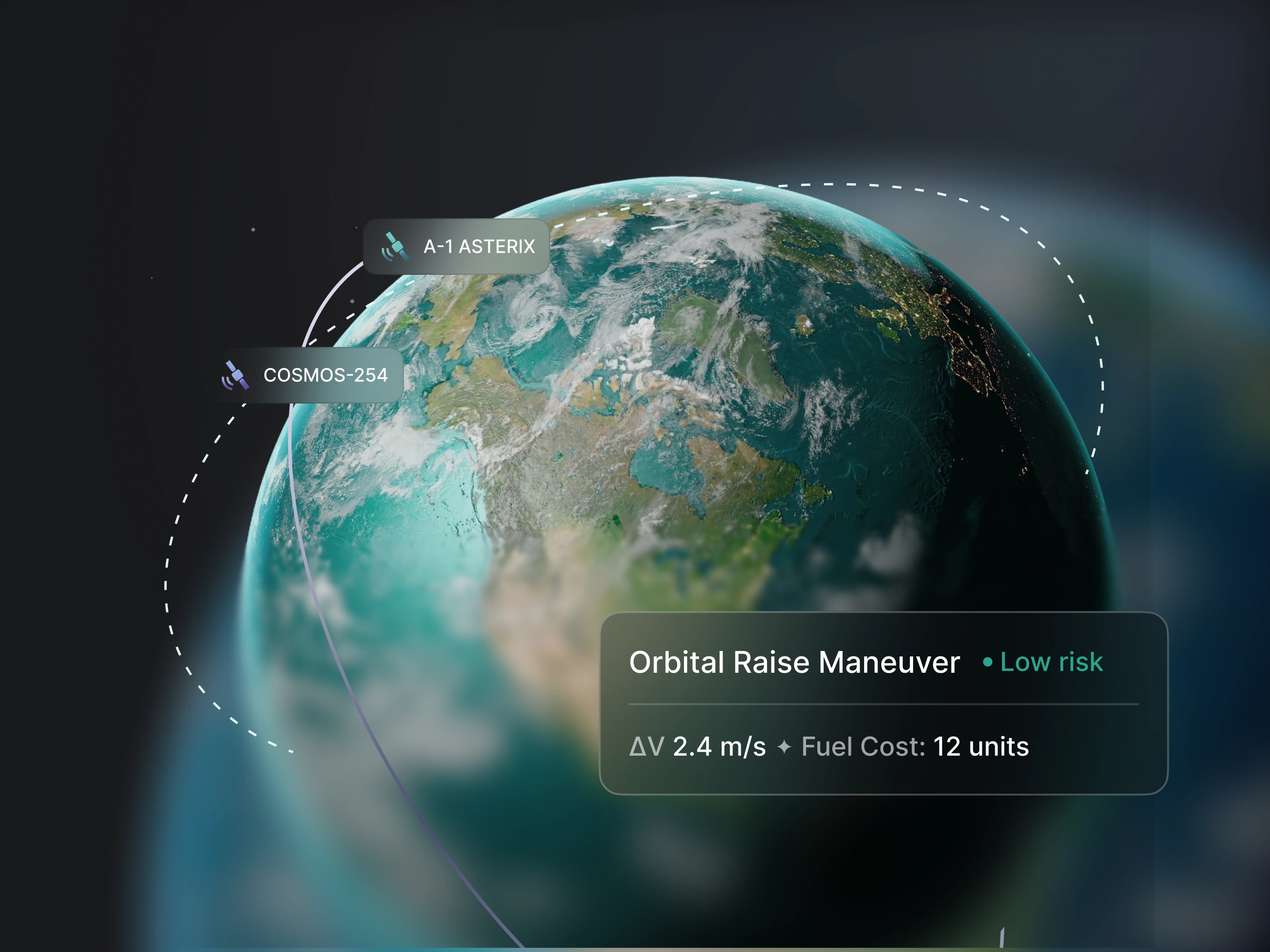
Space Guardian sells automated collision avoidance to satellite operators. The system predicts conjunction risk, calculates the avoidance maneuver, and coordinates it between two operators through a bidding mechanism, so only one satellite has to burn fuel. The company came out of the 8th CASSINI Hackathon, where it placed first in Challenge 3, Orbital Security, in a field of 110 submitted projects. It then had to turn that result into something an operator would trust with hardware in orbit. That meant two audiences and one identity. The website had to make an automated system credible to flight-dynamics engineers who are accountable for equipment they cannot repair, and legible to the agencies and programme reviewers deciding whether the company reaches the next stage. The web app had the narrower and harder job: show an operator why a maneuver is being proposed, what it costs in fuel, and what follows if they decline. One disclosure. The studio holds an operating role at Space Guardian, so this was not an arms-length engagement, and Luka Zlatečan's quote below is a colleague's rather than an outside reference. Read it that way.
What we did
1Brand and positioning
Space Guardian had a hackathon result and a technical concept before it had a product to show. We defined the positioning and built the brand it trades under: the identity carried by the website, the product, and the material it takes to agencies and investors.
2The website
We designed the site Space Guardian sells from, and their engineers built it. It is live at spaceguardian.eu, though the implementation has since moved onto their own stack.
3Web app UX/UI and the design system
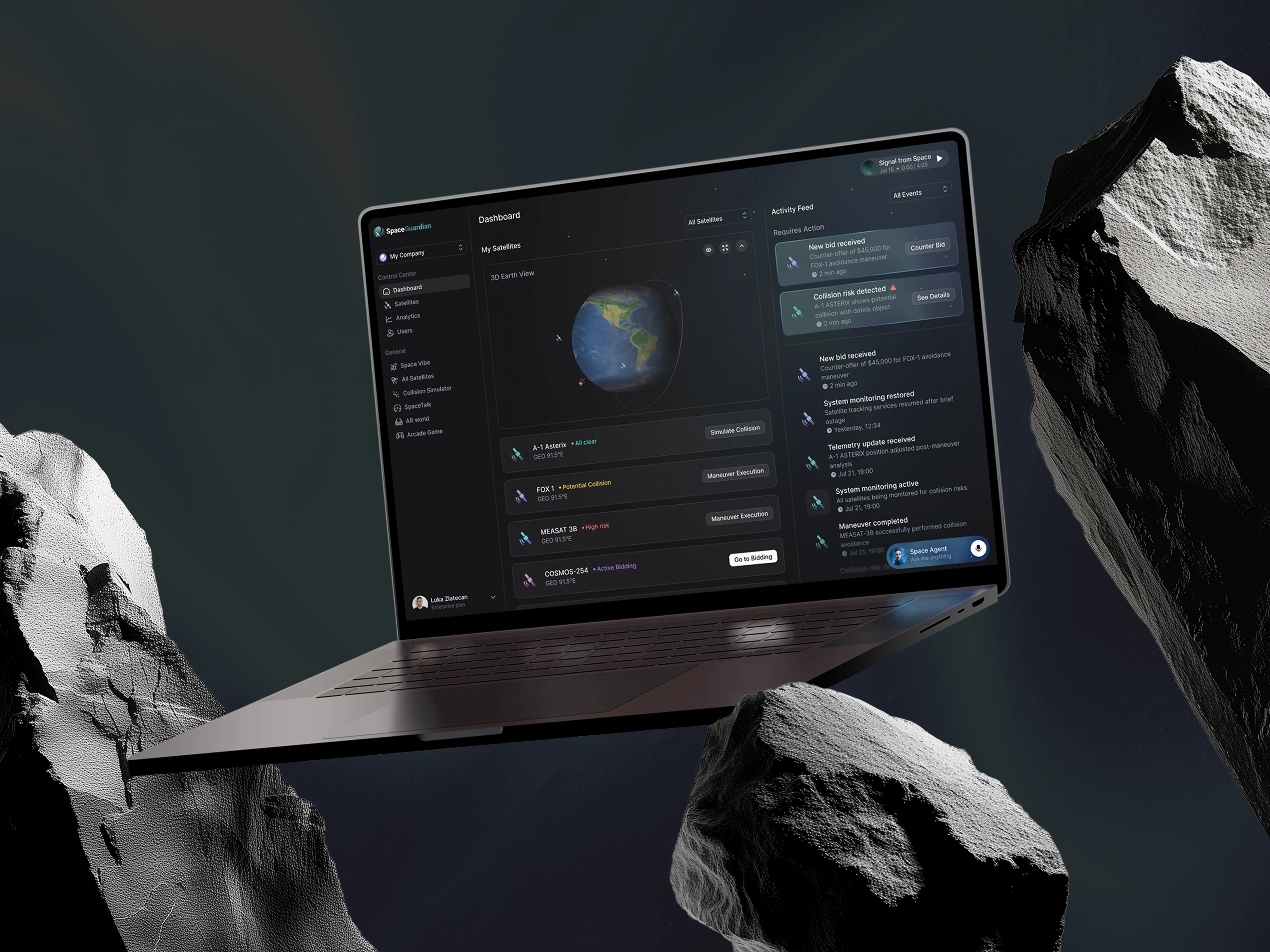
We designed the operator-facing web app, the screen where a conjunction warning becomes a decision about a maneuver. Their engineers built it. What went over the wall was a design system rather than a set of flat screens: 50 components across 30 screens, which is the part Luka Zlatečan picked out.
Build the operator interface to feel calm and easy, in a category where the software is usually difficult to use.
The obvious move was to build what the category builds. Space-tech tooling is dense and expert-facing, and matching it would have signalled technical seriousness to the flight-dynamics engineers who buy it. We went the other way. The screen where an operator approves a collision maneuver is where someone makes a high-consequence call under time pressure, and density works against that. So the product is AI-native by default: the system does the calculation and proposes the maneuver, and the interface has one job, which is to make that proposal legible enough to act on. Space Guardian showed that web app as its MVP in the Startups area at Web Summit 2025.
“It's crazy how great your design system is. When we got it into our hands it felt like magic for developers…”
 Luka ZlatečanCTO, Indigo Labs
What we built
- Platforms
- Web
- Stack
- Design only. Space Guardian's engineers own the production stack.
- Design system
- 50 components, 30 screens
- Timeline
- Started April 2025, ongoing
Related work
- web app ux/ui
- website design
- webflow website
- ai image pipeline
- programmatic seo
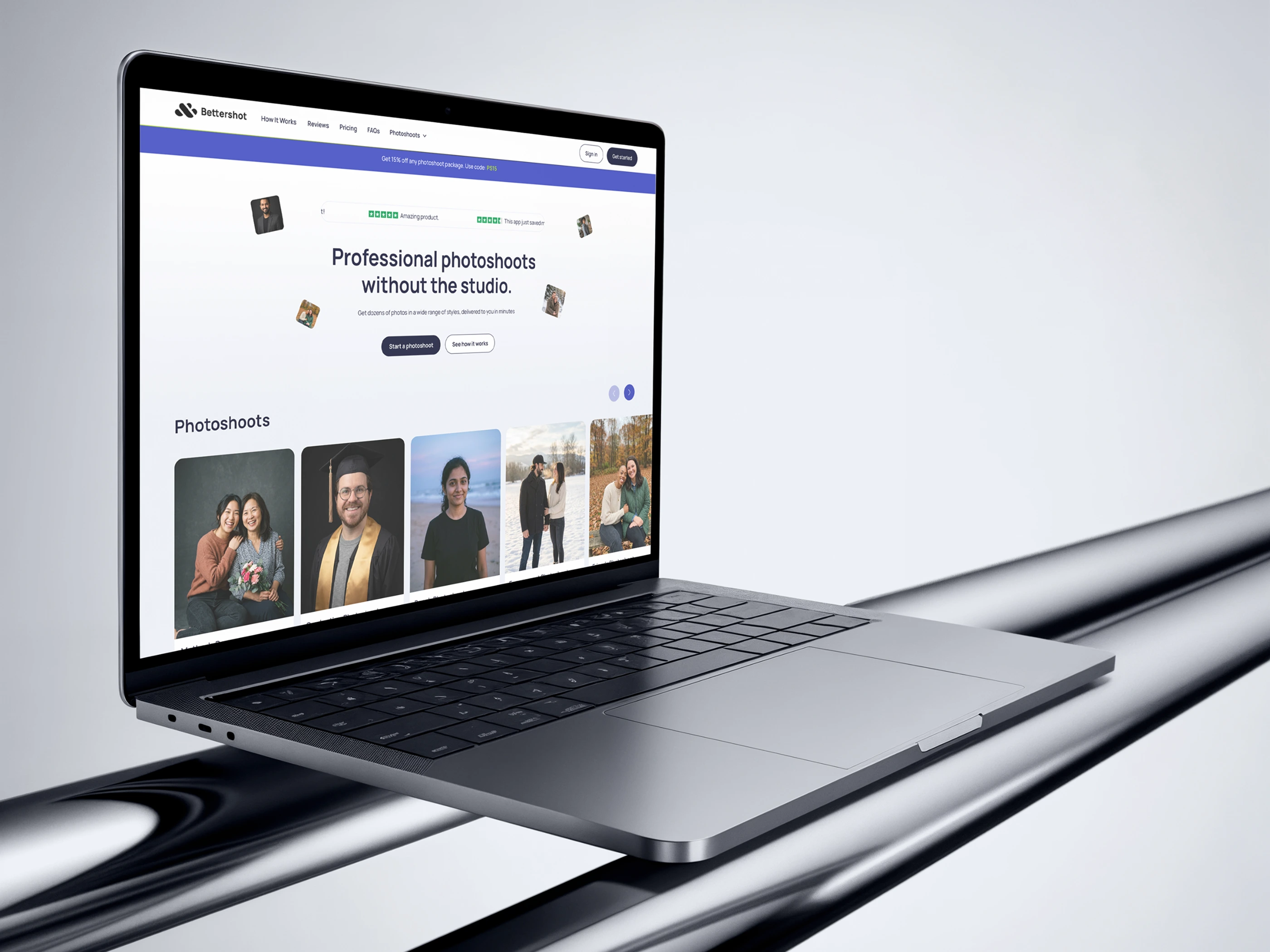
Cutting more than 40% from the cost of every photo the product generates
An AI tool that turns a handful of uploaded selfies into a set of studio-quality portraits.
- website design
- webflow website
- mobile app ux/ui
- mobile app development
- integrations
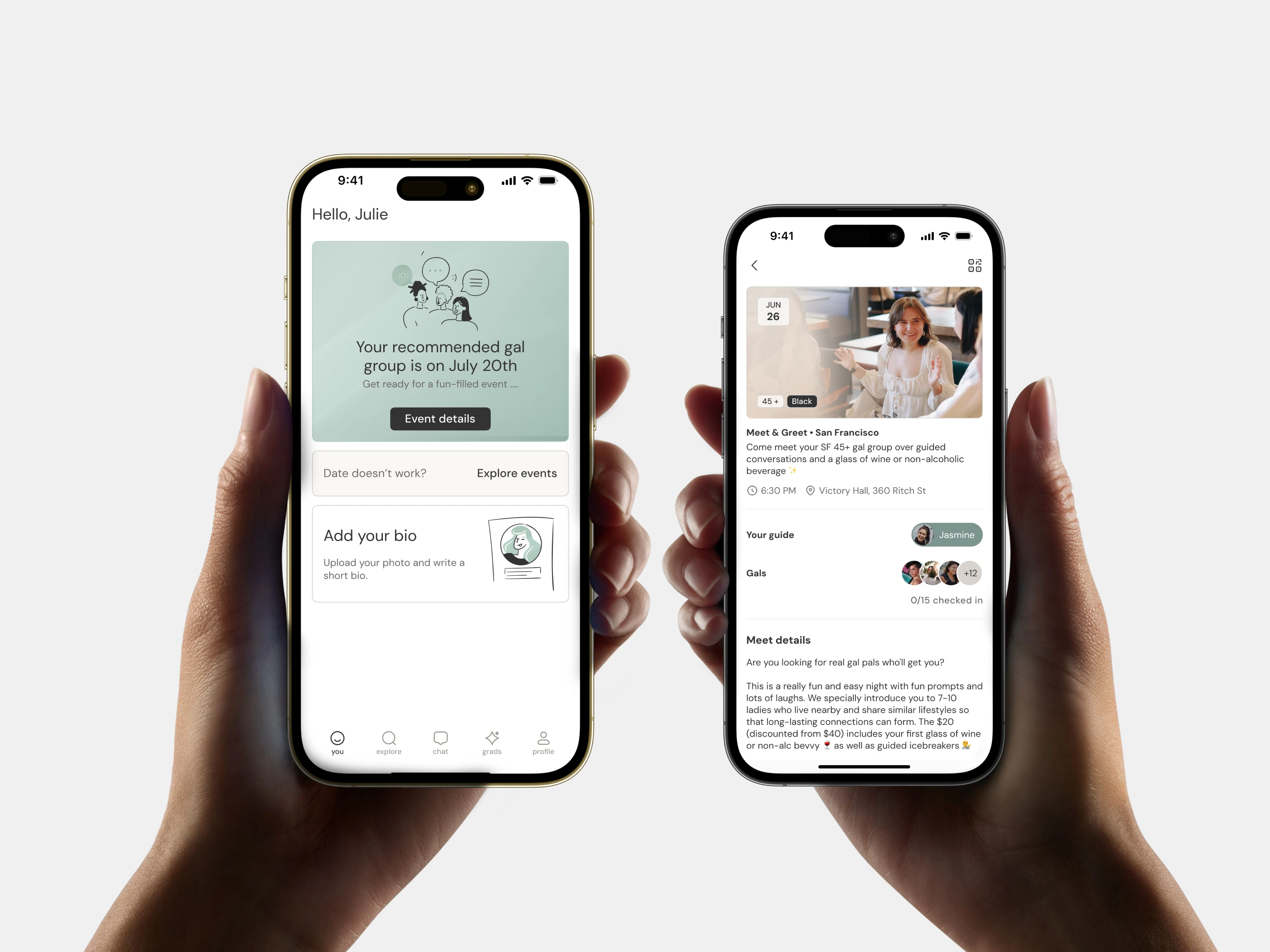
The website and app behind a YC startup at $9.4M ARR
A friendship app that matches women in the same city, then runs them through six weeks of facilitator-led meetups.
- ux/ui design
- design system
- ios app
- embedded web app
- webflow website
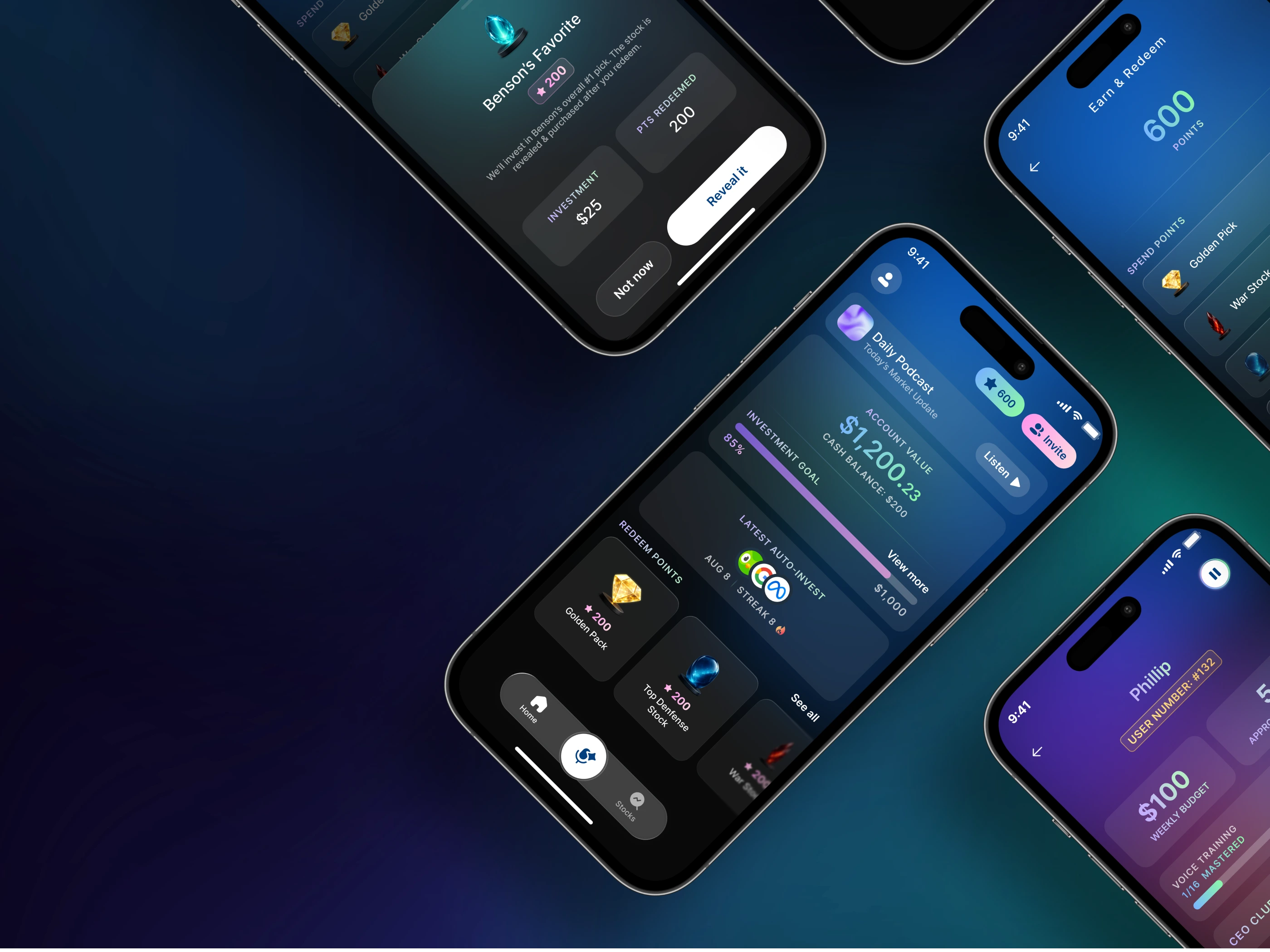
4.8 stars from 1,500 ratings for an app that invests for you every week
An investing app that picks the stocks, then invests a set weekly budget on the user's behalf.